It's June 19. Nothing special today. I was in school, perusing over some notes. No frills nor semblance of an activity outside. Not much traffic. People went on with their weekend routine unhampered. Unless Gloria Arroyo happen to come nearby to inaugurate some projects. Her appearance brings a chaotic change from the routinary, as roads are jammed due to re-routed traffic, as policemen swarm the intersections, and wang-wangs add its noise to the usual sounds of the ambulances and firetrucks.
Today was so ordinary I only learned late in the day that today is the birthday of the Philippine national hero, Dr. Jose Protacio Rizal. Yes, in the Philippines we celebrate the deaths of people. Many times, we forget about their birthdays. Rizal died on December 30 and the government marks the date as a holiday. But the government never gave a hoot about June 19.
I could dismiss this trivia about Jose Rizal. But somehow I also felt guilty about something pertaining to Rizal.
When I was working abroad, one of the service providers of the company I was working with was based in Germany. As an IT Manager, I was always accompanied around by the PR man of the service provider each time I was in Germany.
When in Germany, I was based in Weinheim, a picturesque and hilly town popularly known as the home of the luxury car maker Mercedes Benz. A town nearby was the home of rival BMW. Every weekend, I went around the town and its suburbs. And I was a peculiar sight to behold as locals stopped whatever they were doing to stare and size me up, as if they saw a ghost or a weird ET. One time a bicycle careened into the canal beside the road because the driver kept on looking back at me. Possibly, in this area of Caucasians, I was the only brown human.
My German guide was a well-travelled young man. He seemed to know a lot about the Philippines. I told him I liked the smalltown ambience of Weinheim and that, I liked a lot the nearby city of Heidelberg. It was more cosmopolitan and, atop the city were the ruins of an ancient castle which I visited each time I was in the city. Then my guide recited stanzas of a poem. And he seemed disappointed when I didn't react.
'You mean, you didn't recognize the poem?' he asked. 'That was the official English translation.'
'I'm sorry but I was not familiar with the lines,' I replied.
'Really?'. He thought I was joking. 'Those were lines from the poem To The Flowers of Heidelberg. By Dr. Jose Rizal. Your national hero.'
'And how did you know that?'
'I graduated from the University of Heidelberg, where Dr. Rizal took his Opthalmology. There is a Rizal statue near Heildelberg, in the village where he used to live when he was a student.'
I was embarrassed. I should have known these trivias. I should be the one to inform this foreigner about Rizal. But frankly, I didn't know about these. Or perhaps, I forgot. I knew that Rizal studied in Heidelberg. But I didn't know it was the Heidelberg I frequent on weekends. I knew that he wrote poems. But I didn't know he wrote a poem specific to Heidelberg. Perhaps, it would be understandable that I didn't know there was a Rizal statue in the area. But still I felt pathetic and miserable. Rizal or any Filipino would have been ashamed of me. I felt incompetent and not professional enough beside this German whose salary was less than mine. What if I told him something about the German national hero? But I was not even sure if Germany had a national hero. I didn't like to mention Hitler either because Germans had mixed feelings about him.
That incident happened more than a decade ago. But thinking about it now, I still shiver with embarrassment. Perhaps, I regard Andres Bonifacio as my hero. But Rizal was still an impressive historical figure to be proud of. During those periods of discrimination, he towered above the foreign oppressors.

Today, just like other Saturdays, we went to mass in the evening. And I prayed for Dr. Jose Rizal. Afterwards, we went out to eat. For a change, I was the one who ordered as, ordinarily, my children ordered for the food. The children noticed that our order was over-the-top compared to the usual.
'Daddy dami nating order. Anong occassion?' they asked.
'It's the birthday of a friend,' I replied.
'Sinong friend? Special ba siya? Dahil sa birthday mo nga, pancit lang tinitipid pa.' They giggled.
'Birthday ni Dr. Jose Rizal, our national hero.'
Then we talked about Rizal, his life, his works, and about my experience in Weinheim. I told the kids about the Rizal statue in Heidelberg and about the poem To The Flowers of Heidelberg. I still didn't memorize any line of the poem, but the kids searched for it in the internet when we arrived home. They hoped to recite it in their class in the future.
Yes, today was an ordinary day. But I was sure, with all my blunders, today Rizal would have forgiven me.@
A Las Flores De Heidelberg
José Rizal
Id a mi patria, id, extranjeras flores,
sembradas del viajero en el camino,
y bajo su azul cielo,
que guarda mis amores,
contad del peregrino
la fe que alienta por su patrio suelo!
id y decid ... decid que cuando el alba
vuestro cáliz abrió por vez primera
cabe el Neckar helado,
le visteis silencioso a vuestro lado
pensando en su constante primavera.
Decid que cuando el alba,
que roba vuestro aroma,
cantos de amor jugando os susurraba,
él tambien murmuraba
cantos de amor en su natal idioma;
que cuando el sol la cumbre
del Koenigsthul en la mañana dora
y con su tibia lumbre
anima el valle, el bosque y la espesura,
saluda a ese sol aún en su aurora,
al que en su patria en el cenit fulgura !
y contad aquel día
cuando os cogía al borde del sendero,
entre ruinas del feudal castillo,
orilla al Neckar, o a la selva umbria.
Contad lo que os decía ,
cuando, con gran ciudado
entre las páginas de un libro usado
vuestras flexibles hojas oprimía.
Llevad, llevad, oh flores !
amor a mis amores
paz a mi país y a su fecunda tierra,
fe a sus hombres, virtud a sus mujeres,
salud a dulces seres
que el paternal, sagrado hogar encierra ...
Cuando toqueis la playa,
el beso os imprimo
depositadlo en ala de la brisa,
por que con ella vaya
y bese cuanto adora, amo y estimo.
Mas ay llegáreis flores,
conservaréis quizas vuestras colores,
pero lejos del patrio, heroico suelo
a quien debéis la vida:
que aroma es alma, y no abandona el cielo,
cuya luz viera en su nacer, ni olvida.
To the Flowers of Heidelberg
by José Rizal
(A Translation from the Spanish by Nick Joaquin)
Go to my country, go, O foreign flowers,
sown by the traveler along the road,
and under that blue heaven
that watches over my loved ones,
recount the devotion
the pilgrim nurses for his native sod!
Go and say say that when dawn
opened your chalices for the first time
beside the icy Neckar,
you saw him silent beside you,
thinking of her constant vernal clime.
Say that when dawn
which steals your aroma
was whispering playful love songs to your young
sweet petals, he, too, murmured
canticles of love in his native tongue;
that in the morning when the sun first traces
the topmost peak of Koenigssthul in gold
and with a mild warmth raises
to life again the valley, the glade, the forest,
he hails that sun, still in its dawning,
that in his country in full zenith blazes.
And tell of that day
when he collected you along the way
among the ruins of a feudal castle,
on the banks of the Neckar, or in a forest nook.
Recount the words he said
as, with great care,
between the pages of a worn-out book
he pressed the flexible petals that he took.
Carry, carry, O flowers,
my love to my loved ones,
peace to my country and its fecund loam,
faith to its men and virtue to its women,
health to the gracious beings
that dwell within the sacred paternal home.
When you reach that shore,
deposit the kiss I gave you
on the wings of the wind above
that with the wind it may rove
and I may kiss all that I worship, honor and love!
But O you will arrive there, flowers,
and you will keep perhaps your vivid hues;
but far from your native heroic earth
to which you owe your life and worth,
your fragrances you will lose!
For fragrance is a spirit that never can forsake
and never forgets the sky that saw its birth.
Translated from the Spanish by Nick Joaquin
Sa Mga Bulaklak ng Heidelberg
Pumaroon kayo sa mutya kong bayang pinakamamahal,
O mga bulaklak na hasik sa landas niyong manlalakbay,
At doon, sa silong ng maaliwalas na langit na bughaw,
Sa mga mahal ko'y di nagpapabaya't laging nagbabantay,
Inyong ibalita itong pananalig na sa puso'y taglay
Ng abang lagalag na di lumilimot sa nilisang bayan.
Pumaroon kayo, inyong ibalitang madilim-dilim pa,
Kung kayo, sa bati ng bukang-liwayway, ay bumubukad na,
Sa pampang ng Neckar na lubhang malamig ay naroon siya,
At sa inyong tabi'y inyong namamasid na parang estatuwa,
Ang Tagsibol doong hindi nagbabago'y binubulay niya.
Inyong ibalitang kung sinisingil na ng bukang-liwayway
Ang buwis na bango ng inyong talulot pag ngiti ng araw,
Habang bumubulong ang bagong umagang halik ang kasabay
Ng "Kung inyo lamang nababatid sana yaring pagmamahal!"
Siya'y may bulong ding inaawit-awit sa katahimikan,
Kundiman ng puso na sa kanyang wika'y inyong napakinggan.
At kung sa taluktok niyong Koenigsthul ay humahalik na
Ang mapulang labi ng anak ng araw sa pag-uumaga,
At ang mga lambak, gubat at kahuya'y binubusog niya
Sa daloy ng buhay na dulot ng sinag na malahininga,
Yaong manlalakbay ay bumabati ring puspos ng ligaya
Sa araw, na doon sa sariling baya'y laging nagbabaga.
At ibalita rin na nang minsang siya'y naglalakad-lakad
Sa pampang ng Neckar ay pinupol kayo sa gilid ng landas,
Doon sa ang tanod ay ang mga guhong bakas ng lumipas,
Na nalililiman ng maraming punong doo'y naggugubat.
Ibalita ninyo kung paanong kayo'y marahang pinupol,
Pinakaingatang huwag masisira ang sariwang dahon,
At sa kanyang aklat ay ipinaloob at doon kinuyom,
Aklat ay luma na, datapuwa't kayo'y naroon pa ngayon.
Hatdan, hatdan ninyo, O pinakatanging bulaklak ng Rin,
Hatdan ng pag-ibig ang lahat ng aking nga ginigiliw,
Sa bayan kong sinta ay kapayapaan ang tapat kong hiling,
Sa kababaihan ay binhi ng tapang ang inyong itanim;
Pagsadyain ninyo, O mga bulaklak, at inyong batiin
Ang mga mahal kong sa tahanang banal ay kasama namin.
At pagsapit ninyo sa dalampasigan ng bayan kong irog,
Bawa't halik sanang idinarampi ko sa inyong talulot
Ay inyong isakay sa pakpak ng hanging doo'y lumilibot,
Upang sa lahat nang iginagalang ko't sinisitang lubos
Nawa'y makasapit ang halik ng aking pag-ibig na taos.
Maaaring doo'y makarating kayong taglay pa ang kulay,
Subali't ang bango'y wala na marahil at kusang pumanaw,
Wala na ang samyong sa talulot ninyo'y iningatang yaman,
Pagka't malayo na sa lupang sa inyo'y nagbigay ng buhay;
Iwing halimuyak ang inyong kaluluwa, at di malilisan
Ni malilimot pa ang langit na saksi nang kayo'y isilang.

Saturday, June 19, 2010
Rizal's Day


Sunday, May 30, 2010
Santacruzan sa banwa ko
I consider May the month of debutantes – when awkward girls metamorphose into poised and pretty ladies to enthrall the world. At least, this happens in my side of the world in the flower month of May.
In the Philippines, May is not complete without the Santacruzan or the culminating activity of the Flores de Mayo – when young boys and girls offer flowers to the altar of the Virgin Mary in a month-long novena. Santacruzan is a religious festivity which re-enacts the journey of St. Helena, the mother of Constantine the Great, to Calvary to look for the cross used in the crucification of Jesus Christ. In every Catholic parish in the Philippines, the Santacruzan is re-enacted in all its splendor, to give color and worthwhile activity to the sometimes humdrum existence in the provinces; and lately to raise funds for the church.


To re-enact St. Helena’s journey, a retinue of beautiful girls wearing the most beautiful and colorful gowns, parade around the poblacion to embody the entourage of St. Helena and the virtues of the Virgin Mary. This is why I call May the month of debutantes – because the girls are just stunning, while a day before, they are just common students or errand girls of their parents. And not because of their make-up or get-ups.
Just look at the pics!


Ang rebulto ni Tan Tono (siya ang nagtukod kang banwa ko nga tinuboan) nagalantaw sang mga maanyag nga mga lin-ay sang banwa sa ginahiwat nga Santacruzan.


Ang Santacruzan ginakabig nga hirimuon kang mga kababaihan. Gani ang mga lamharon nga kalalakihan nga dya, giya lang sa gwa kang simbahan nagahulat. Samtang ang mga kababaihan naga lantaw kang pag-korona kang Reyna de las Flores sa sulod sang simbahan.
Please click on the arrow to play the slideshow.
After more than 2 decades, this was my first time to witness a Santacruzan in our town. Maybe there were changes made in the festivity since my last outing. But the Santacruzan is about St. Helena, or Reyna Elena. And the focal character in a Santacruzan is the Reyna Elena and her escort, the Constantino. But in the Santacruzan that I just witnessed, why was there no Reyna Elena?
Of course, whatever. Nobody cares. As long as all the girls and their proud parents had their moments of fame.
But, really? Was the Reyna banished during the long interregnum?
Tuesday, April 27, 2010
INCA and the Mariit Wildlife Conservation Center
I planned this post to be titled Lambunao's Wilds as I was really planning to write about our encounter with the wild side of Lambunao, a second class municipality in central Iloilo. (The municipality is about 48 kilometers from Iloilo City and is known for its mountainous terrain, thick forests, countless waterfalls, and its hidden tourist draw - a 7-hectare mountaintop lake popularly known as Tinagong Dagat.) But after my initial scribblings about the Mariit Conservation Center, I ran out of words. Or I was just too lazy to write further. But as they say, a picture is worth a thousand words. So, there. I'll just give you the pics and a short caption... and just let your imagination run wild and free. Just like the wilds of Lambunao.
The Iloilo College of Agriculture (INCA) campus may just be near. But it’s surprising that only a few of the local adventure seekers have discovered the beauty and challenges within the hundreds of hectares of campus. And this is not an ordinary campus, because aside from the school, within the campus are mountains of virgin forests, some waterfalls, endemic animals, a wildlife conservation center, and of course human settlers.


INCA is about ten kilometers from the poblacion of Lambunao, Iloilo. The roads are winding and Baguio-like and it could be hard to travel to this area during the rainy season. No wonder, the college just catered to just over 200 students. But by now, the roads are being paved. Thanks to the election season and to the mole of Gloria Arroyo plastered in big billboards along the way.
Flowers bloom inside the INCA campus - lirio (L) and madre de cacao blossoms (R).


But setting the road aside, INCA is the best location for those taking up BS in Agriculture and BS in Forestry. The place is just a gigantic greenhouse where plants would grow in ideal environment. And even if surrounded with a mountainous jungle and far from the poblacion, INCA is safe as there is a small community of settlers and professional staff and academics living nearby. And a military infantry station is visible in the tallest promontory as a 24/7 security blanket over the campus.
In our INCA adventure last weekend, my group of adventure seekers which was composed of my extended family, stayed in one of INCA’s fully equipped guest houses. Guests can select from among the many airconditioned or fan rooms for a nominal fee. We settled for the fan rooms, as we really planned to sleep in tents. The caretaker, a BS Hotel and Restaurant Management student of INCA, was at hand to prepare our food if in case we asked. In the evening, we told the kids stories about ghosts to spook them to sleep early.
Early, the next morning we jogged along the paved roads around the school buildings. The air was crisp and the low clouds still hovered about the trees. The grasses were wet with dew which was somehow uncommon to city dwellers like us. Behind the thin fog, we could see far away children grazing their carabaos. It was a nostalgic sight. It was the first morning I haven’t heard a sound of a motor vehicle.


We headed to the nearby Mariit Wildlife Conservation Center (mariit is a Kinaray-a word which means enchanted). It was no less than the center’s Director, who toured us around. Good thing about the smalltown ambience. There was no such thing as protocol.
The Director informed us that they only allow visitors inside the center early in the morning during feeding time. Otherwise, the center was off-limits because it was breeding season for the animals.


The center have Dolongan and Tarictic Hornbills (kalaw), Arrow-tail Parrot (pikoy), White-spotted Deer, Wild Boars, Cloud Rats, Leopard Cat (singarong) and other species they rescued from the wild. We were informed that the center was the first in the world to successfully breed in captivity the Dolongan hornbill.
But our main purpose to venture into this side of Lambunao was to climb the mountains to see its waterfalls.

We started our mountain trek towards the waterfalls on a light note - everybody thought it would just be a walk in the park. Especially with the sight of wild flora never before seen by anyone of us.

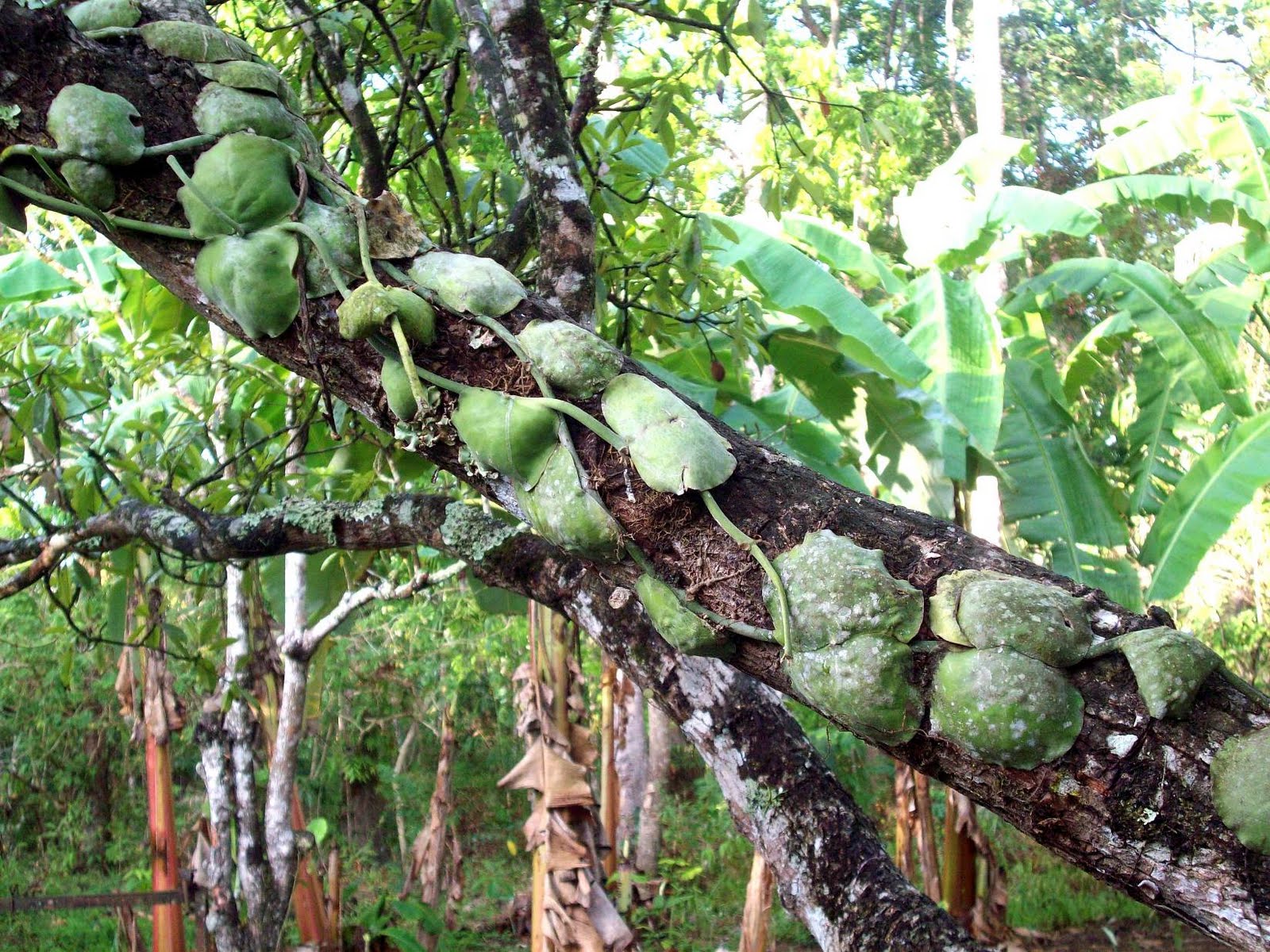


I stayed at the tailend of the group as we climbed singlefile, not because I was holding the camera, but because I would like to be there to break the fall of anybody, especially the kids, if they happen to fall, slide or roll down accidentally. On the way down, I would also go down first, not just to record on cam the agony of the old and the excitement of the young, but also to be ready to catch whoever may thought he or she had some powers to roll at high speed in such a steep incline.

The view was fantastic and mesmerizing. But we had to beware of wet or moss covered rocks. They were slippery.


Friday, April 2, 2010
Viernes Santo
My family (wife, kids, siblings, nieces, nephews, a few cousins) have been spending the Semana Santa in some other places in the Philippines. We regard the Holy Week as a time to bond with the family and an opportunity to travel together as Holy Week is the time when those working can take a leave from the office and those studying are already free from school.
This Semana Santa, we stayed in Iloilo. And therefore we had time to mingle with friends and relatives who were truly surprised to see us in Iloilo during this time. They thought we finally succumbed to the high cost of travel. And they were right.
But anyway, we had a swell time in Iloilo. To me, it’s not the place. The place just lends surprise and excitement to the bonding moments. To me, what’s important is that our family is together and enjoying.

On Holy Friday, or Viernes Santo, we were in Cabatuan, about 25 kilometers north of Iloilo City. Cabatuan is one of the few towns in Iloilo that observes Viernes Santo with the traditional early morning procession to the kalbaryo which is about a kilometer from the poblacion. Along the route to the kalbaryo are makeshift altars depicting the fourteen stations of the cross which culminates with the gigantic cross atop the kalbaryo. The cross symbolizes the crucification of Jesus Christ on Mt. Calvary.
The kalbaryo is a high hill in Sitio Balic outside the poblacion of Cabatuan. It’s not an ordinary hill as it has a steep side. But somehow, the Semana Santa tradition to the promontory have sliced a footpath on the steep side which through the years had grown to a small dirt road that can accommodate a car or the carroza that brings the lifesize statue of the Nazarene halfway to the top of the hill.


We arrived in Cabatuan already past 8:00am. And the tail-end of the procession had already reached the kalbaryo. We were supposed to do the Via Crucis but it was so hot so we took a tricycle to the kalbaryo. The kids were ecstatic as the last time they climbed the kalbaryo was years back. It seemed a new experience to them now.
Devotees were already on their way down when we reached the kalbaryo. Everybody was busy buying native delicacies, fruits, and even fresh fish. The foot of the kalbaryo became an instant tindahan. One would wonder whether the people were doing penance or enjoying the fiesta atmosphere. On our part, we were enjoying!


Semana Santa is vacation time to many. And here in the kalbaryo, a local would easily discern the visitors or a kababayan just arrived from somewhere. Local visitors may act like buki, or an ignorant newcomer, as they pointed to or oggled at common objects which could be new to them. Kababayans who just came from Manila wore the latest fashion - never mind if the fashion was not meant for a dusty and hot kalbaryo-climbing. They too were very verbal; and in Tagalog even, for everybody to hear, nevermind if the Tagalog sounded like Kinaray-a. Kababayans who just arrived from abroad toted with their flashy cameras aside from their expensive cellphones. Nevermind if they could take quality pictures with their miniature cellphones. They slang their cameras over their shoulders wherever they go, as if the cameras were part of their fashion statement. They wore rubber shoes with short pants cut above the knee. The last time I wore above-the-knee short pants was when I was in Boy Scouts.
There were only a few people going up, and fewer still lingered near the cross atop the kalbaryo. But at least, the few people made the view from the top less scary to the kids. The view was breathtaking and unhampered for kilometers. We saw the twin spires of the old Catholic church and the far mountains of the neighboring town of Maasin. When we descended, we bought ibos, kalamayhati, alupi, and betcho-betcho which the kids loved.


As in the past, we passed by the house of classmate Jocelyn M for breakfast of sotanghon soup, puto, and tsokolate. It was also a time to meet other classmates and exchange stories. Edith P whose name is ended with an Ed.D., was there. Also Cami and Dakul. Others had already left.
In the evening we joined the procession which was highlighted by the colorful parade of well dressed saints atop heavily decorated carrozas. We followed the carroza of the Pieta – lifesize statues of the Virgin Mary carrying on her lap the lifeless body of Jesus. We were told that the Pieta was sent from Spain and were under the upkeep of our family for seven generations already. The current caretaker is a seconnd cousin. When we were kids, I remembered seeing the dismantled limbs and other parts of the Pieta kept inside a big wooden box in the house of an uncle. The maids would scare us with the life-size limbs.
After the procession, a multitude of worshipers formed long queues that snaked in the streets outside the church, and waited their turns to pay homage to the Santo Entierro or the supine dead statue of Jesus Christ. We didn’t join the queue as it was already about 9:00 pm. I led the kids to inside the church and showed them what the worshippers were doing. Well, the worshippers were kissing a big crucifix instead of the Santo Entierro. The Santo Entierro was inside a glass encasement and displayed near the entrance of the church.
The last time I was in this church during Viernes Santo, the worshippers were kissing the feet of the Santo Entierro. The santos was just like a big cadaver surrounded by townfolks who acted as the apostles. Yes, it was like a cadaver fresh from the morgue and lying cold and dead. And it was common to see small kids wailing with fear as their parents dragged them near the santos.


The kids were sleepy when we got back to the car. But I was sure they learned from the Viernes Santo in Cabatuan. Alleluia!
Thursday, October 8, 2009
San Joaquin, Iloilo
 If you take the road from Iloilo City to Antique, the last town of Iloilo that you will pass by is San Joaquin. It is a 3rd class municipality and deemed un-touristy. It is one of the many blur of towns passed by if one opts to pass through Antique, coming from Iloilo, to Boracay.
But San Joaquin has some exciting spots to offer if only one stops by to look around. Its beaches along Tiolas, awashed with pebbles instead of sand, are havens to swimmers. But take note that the beaches are deep. Kantilyado. I remembered I nearly drowned in one of the beaches when I was still in college.

The ancient baroque San Joaquin Church is a must-see. It is made of limestone from the nearby town of Igbaras and coral stone which was abundant in San Joaquin. Like many other churches, it served in the past a dual purpose - as a look-out for sea-faring invaders and as an impregnable refuge for the town’s people in time of invasion. Today, the church is a beacon of the Catholic faith and a proud landmark of San Joaquin. The church’s façade is its most famous trademark and is unique in the Philippines. While other churches display saints, angels or holy objects on its facade, San Joaquin Church sports a mural of the victory of the Spaniards over the Moroccan forces in the Battle of Tetuan. So realistic and so detailed are the carvings that a viewer standing on the ground can see the facial expressions of the soldiers during the battle. In fact, the façade could have earned the church its recognition as a national historical landmark.


Outside the poblacion, as the road zigzags up the mountains to Antique, motorists can see stalls along the road selling bandi and other peanut condiments. (Reminds me of the mountain roads in Baguio where locals sell strawberry and ube jams.) The San Joaquin bandi and condiments are made by the locals and are good pasalubongs. A note to drivers: stall owners give the driver whatever item for sale he wants, as bonus for stopping by. I was always given a big bandi the size of a saucer, even if I drive a family vehicle - with only my wife, kids, and some nieces as passengers – and even if my passengers had already asked the needed paaman with their purchases after an intense bout of haggling.


San Joaquin is 53 kilometers south of Iloilo City. The road is asphalted and safe. The public utility jeepneys plying the area are somewhat too fast. And it seems embarrassing to apprise the driver when the local passengers seem not to care and they even seem to enjoy the fast ride.
Note: The pictures above were taken when we passed by the municipality of San Joaquin on our way back to Iloilo from Antique.@
